

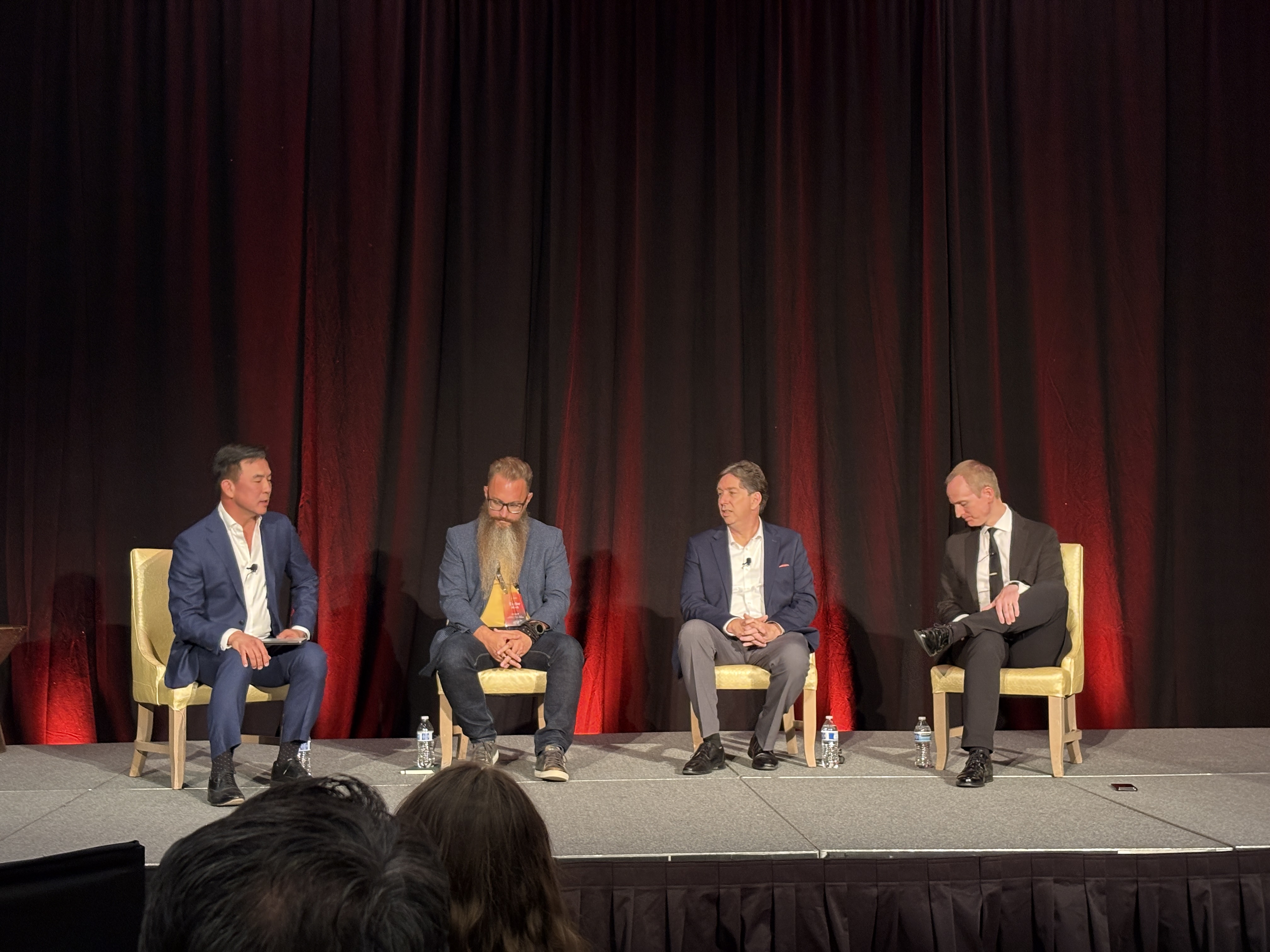
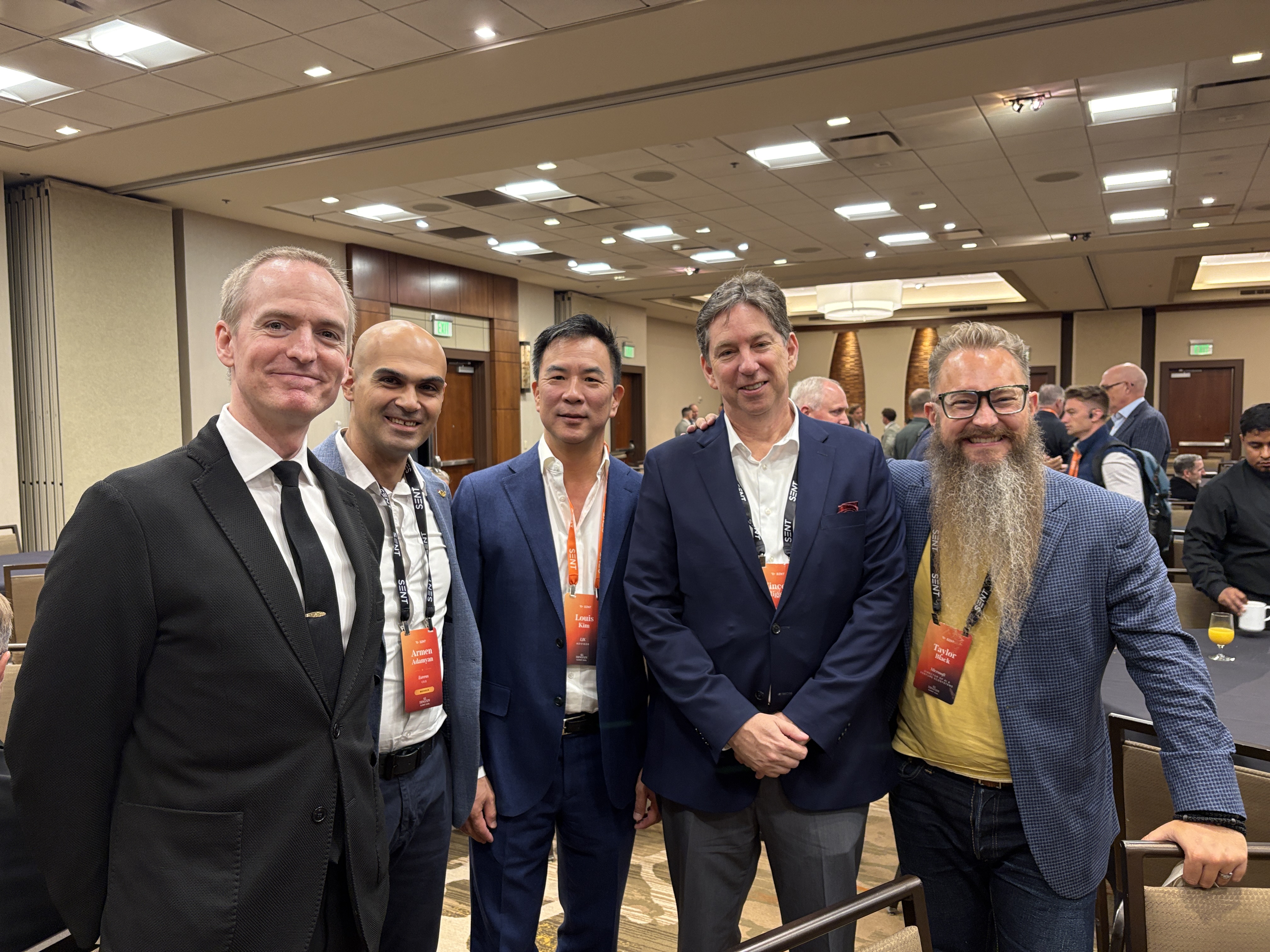
SENT Summit 2026 brought together conversations around faith, entrepreneurship, leadership, technology, and the future of work. For Armen Adamyan, CEO of Esterox, the Summit was an opportunity to reflect on a question that is becoming increasingly important in a rapidly changing world: How do we build businesses that remain deeply human and purpose-driven while embracing new technologies? Throughout the Summit, several themes came into focus: the importance of meaningful relationships, discovering and using our individual gifts, finding purpose in our work, and making sure technology, including AI, serves people rather than replacing what makes us human.
.JPG)
Be Open to the “Holy Collisions”
One of the thoughts that stayed with Armen came from Jonathan Reyes of the Augustine Institute:“Be open to the holy collisions. Be open to the people God wants you to meet.” It is easy to think of business relationships in purely practical terms: clients, partners, employees, opportunities. But some of the most meaningful encounters cannot be planned. The Summit was a reminder that relationships are not simply a means to an outcome. They are part of what gives our work meaning. Jonathan Reyes also challenged participants to think differently about the relationship between faith and business: not faith versus business, but how business itself can serve Christ and serve others.
From a Functional Society to a Relational One
Another important theme throughout the Summit was the role of relationships. Modern life increasingly encourages us to measure everything through functionality: What does this person do? What can this technology achieve? How efficiently can this process be completed? But people are not functions.The Christian understanding of God begins with relationship, the relationship within the Holy Trinity. And if we are created for relationships, then our businesses and communities should reflect that reality. This becomes especially important as technology continues to reshape the way we communicate. We may be more connected than ever, while becoming less present with one another. Creating phone-free moments, having conversations without distractions, spending time in silence, and simply being present with other people may sound simple. Yet they are becoming increasingly intentional choices.
What Are You Designed to Do?
Patrick Lencioni's The 6 Types of Working Genius offered another perspective on work and leadership.The six types: Wonder, Invention, Discernment, Galvanizing, Enablement, and Tenacity; describe different ways people naturally contribute to a team. Some people are energized by imagining possibilities. Others create ideas, recognize what will work, mobilize people, support others, or bring projects to completion. The lesson is not that one type is better than another.It is that we are not designed to do everything. As one of the Summit's ideas suggested, burnout is not necessarily caused by working too much. It can also come from spending too much time doing work that does not fit our strengths. For leaders, this creates an important responsibility: understand our own strengths, recognize the strengths of others, and build teams where people can contribute in ways that allow them to thrive. There was also a powerful analogy shared at the Summit: imagine receiving a gift that was specially prepared for you, but never opening it. In a similar way, each person has gifts that can remain undiscovered or unused. The challenge is to discover those gifts and then use them in service of others.
AI: Making Technology More Human
Artificial intelligence was naturally another important part of the conversation. At Esterox, we see every day how rapidly AI is changing the way businesses work. Automation, intelligent workflows, AI-powered products, and new technologies are opening opportunities that would have seemed impossible only a few years ago. But the Summit raised a question that goes beyond technology: What kind of future are we building with AI? The goal should not simply be to automate more tasks or make people more productive.We should also ask what that additional time and capability allows people to do. Can technology help us spend more time with people?
Can it remove repetitive work and create space for creativity?
Can it help us solve problems that genuinely matter? In other words, we should make AI help us become more human. Technology should be a tool that serves people not something that determines what people are for.
Finding Your Mission
Several speakers, including Dr. Gregory Bottaro, Barry Rowan, Jackie Mulligan, Taylor Black, Matthew Harvey, and Arthur Brooks, approached questions of purpose, relationships, personal development, and mission from different perspectives. One idea that particularly stood out was the importance of asking: Why am I alive? And perhaps an even more practical question: What would I be willing to give my life to? Arthur Brooks spoke about walking the Camino as a way of stepping away from the noise and rediscovering one's mission. In a world where our attention is constantly being captured, silence and even boredom can become valuable. Sometimes, we need to stop consuming information long enough to discover what we actually think.
Faith First
The Summit ultimately brought many of these ideas back to one foundation: faith. Faith affects how we see our work, our relationships, our time, our responsibilities, and the people around us. It also changes the question of success. Success is not only about how much we build, how quickly we grow, or how efficiently we operate. It is also about what we build, why we build it, and who benefits from it. For Armen and for Esterox, this perspective is especially meaningful as we continue working at the intersection of technology, business, and innovation. There are significant challenges ahead, particularly for Armenia. But there are also significant opportunities. Our time is limited. We cannot do everything. We have to learn what to keep, what to let go of, and where our energy can create the most meaningful impact.
Perhaps the simplest takeaway from SENT Summit 2026 is this: Use things. Love people. Serve others.
And as technology continues to transform the world around us, keep faith, purpose, and human relationships at the center of what we build.